As you all know, since the mid 2012 ( give or take a few months ), we have ushered in to a golden age of modelling. The golden age brings us an overwhelming amount of kits, paints, weathering products and educational books and DVDs. The process of getting the information necessary for a good model with an attractive finish is easier than years ago, and generally the quality of models made all around the world is improving dramatically attesting to the now easily aavailable and well done guide books. Among the myriad of guide books however, some modellers and certain publications become milestones in modelling world like no other. This currently reviewed book is one of that kind.
As soon I saw that this book been announce, I had to have it!
I always been a fan of José Luiz's works. As you all know, he's was a modeller from the ''Spanish School '' of modelling. I'm sure I don't need to explain what the Spanish School is. José Luiz took the basic principle of the Spanish School's display of vibrant colours and develop it further into which he termed '' the Black and White technique ''
The book has 80 glossy pages with cover. The quality of the print is excellent and three is no instances of defects or blurry pages. The images are sharp ( although some can be quite small for the eye) , the font for the text is very suitable for reading and there is a sufficient amount to both read and observe on each page.
This book is structured to allow readers a gradual introduction into the idea behind the book, author’s concept and the B&W technique, detailed explanation of the materials and finally step-by-step examples of how to make a very attractive model.
I am not going to write all details about this in too much details as better sites such as Armorama has already covered it in details. In fact, I will just point out a few high point of this book that prove that this is a must-have.
This chapter is about colour and it's very obvious that this is targeted for new starter but veterans can also benefits from this.
A chapter dedicated to washes and what colour wash should be used is very welcomed.
Now this is the cream of the crop. I have a lot of guide books ( even the widely acclaimed Tank Arts book ) but never have I seen a guide that is dedicated this much in oil usage. José has gone taken the trouble of listing what oil is perfect for what application. For me, this is gold. I have read all the famous book but never have I seen such breakdown for oil usage and this section has benefited me alot. Fair enough, there's not too much listed here but this is a necessary need-to-know pointer and one can develop further one's own style base on this information.
This is another good thing of the book. This table basically tell you the steps from start to finish of a process of making a model kit; when to put on filter, when to put on wash so on so forth. This table will greatly benefits the beginners.
Here José explains the benefits of his Black and White technique and shows how it can substitute the classic approach of highlights and shadow that we are mostly using nowadays. In a nut shell, when using Black and White approach you paint the model using a gradient of greys along with black for the darkest shadow and white for the top highlight. Here all necessary effects are created prior to application of colour scheme to the model – chipping, mud, everything! The main advantage (on top of the model looking beautiful in black and white) is that you can play around with monochrome model as long as you want without risk of ruining it and then when you finally apply very diluted base colour to model you only enhance already created effects.
José has put in the necessary steps of his B&W in a very comprehensible table and you can see it is well laid out and you can easily apply the B&W technique yourself after a thorough reading.
The examples part features 5 exclusive models that have never been published elsewhere and were made especially for that edition ( I follow his works quite closely and I haven't seen them in any other publication. I could be wrong though). Different scales, eras, and subjects - José shows full range of possible techniques and makes really attractive models. Basically, these are ready to use recipes and the readers would be able to pick up ideas straight from the text as the explanations are clear and simple. Some of these builds like the Tiger and Tiran use Black and White technique more extensively, while M-1078 is closer to earlier “zenithal light” models. Altogether, this is very intense section, packed with hundreds of images that clearly show step-by-step progress. Very inspirational!
In sum, this book is quite outstanding. The text is very comprehensive and will gives you a real push go to the bench and try the B&W techniques.
The print quality is very good and it is printed on glossy papers.
All the steps are well explained using the illuminating photos.
The different tables with different functions of each material or technique are, beyond doubt, a great help and something to always have on hand in the workbench.
The lowest point is some spelling typos easily detectable in a quick read (like sastifying or form when it should be from) but this is minor.
In short, the book is suitable for the novice modellers to the advance ones, and is useful on any shelves with dozens of useful tips, easy to follow and great advices and great table charts.
One other thing, the book is “perfectly bound” ; it is quite rigid and can prevent or resist full opening, you will have to use a book holder (or put something on top of the opened pages) if you would like to keep it open on the bench for reference while working on the model.
VERDICT -
MUST HAVE. GET THIS BOOK ASAP.
Happy modelling guys and have a nice day.
Read more >>
I am an avid fan of World of Tanks and when the premium tier 8 KV-5 was available in the shop, I jumped on the chance and bought it immediately. I have never regretted buying this premium and I really love it. It's just a nice to play bruiser.
I have always wanted to see the KV-5 in a kit form and Takom came to the rescue.When this kit was announced, I couldn't hold back my excited and almost jumped on the pre-order train to get it but I held back because of the price and only managed to get it last week quite cheaply.
I tried looking for review for this particular kit but only managed to find 2 Russian reviews and non in english. I know people would be curious so I decided to do a inbox peek for this particular one.
As you all know, I'm one of the guys who don't give a damn about how a side skirt of a tank is 2mm too short or too long or blah blah. So, I will just keep this as a look of what is inside the box and some very obvious pros and cons of the kit.
This is my first time buying a Takom kit and I have to admit, I am pretty much impressed.
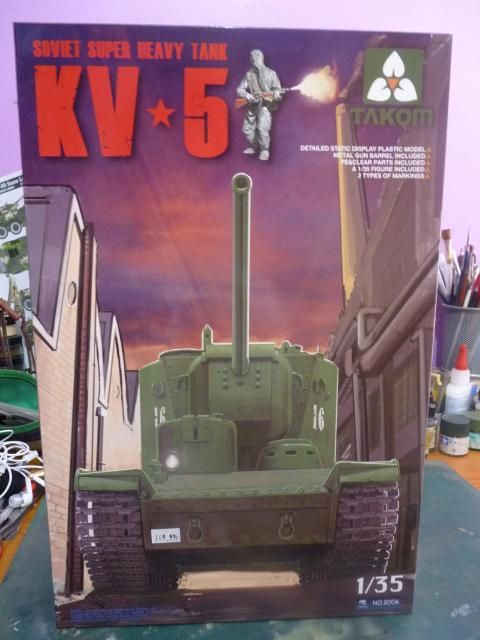
Firstly , we have a very high quality box with a menacing sight of the KV-5 on it -
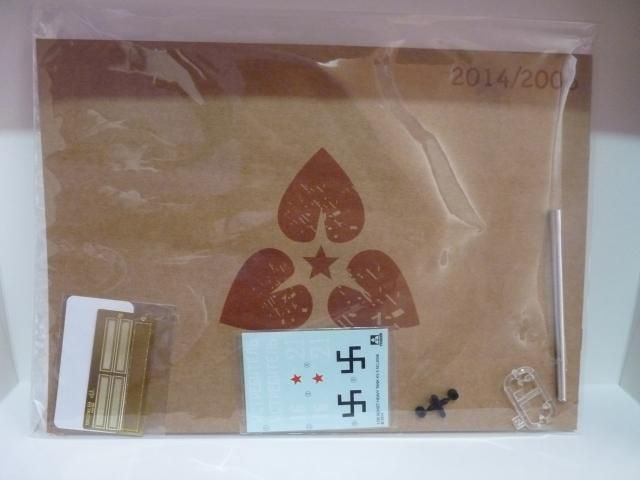
The first time on top you will see is the nicely sealed back of Manual, Decals, P.E, Clear parts and Poly cups.
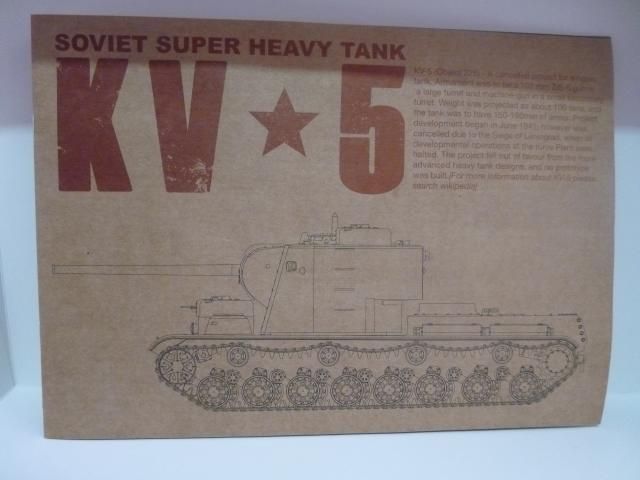
A lot of people are unfamiliar with Takom so I took some photo of the Manual -
Obviously, we start with the cover -
And on the very first page, we have some beginner ( and even kids) friendly level of caution and warnings and FYIs for modelling -
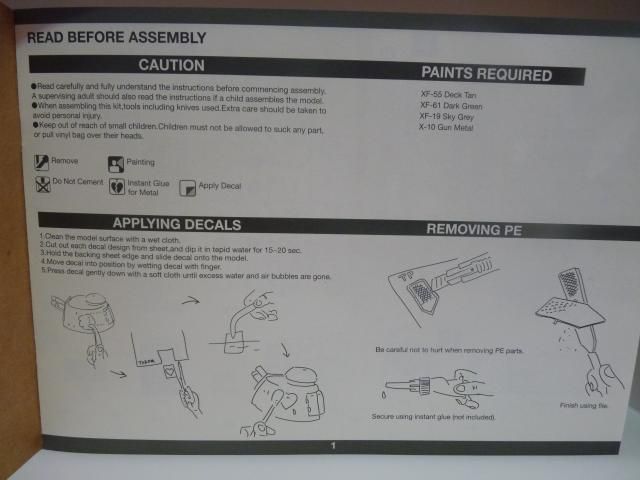
After that, we have a page of part break down -
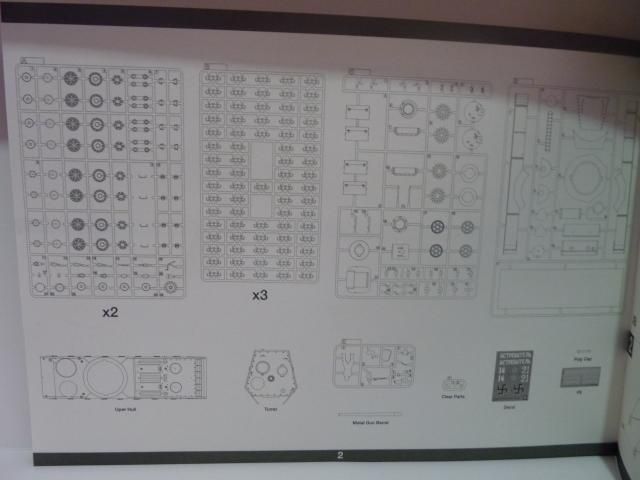
And this is how the inside pages look -
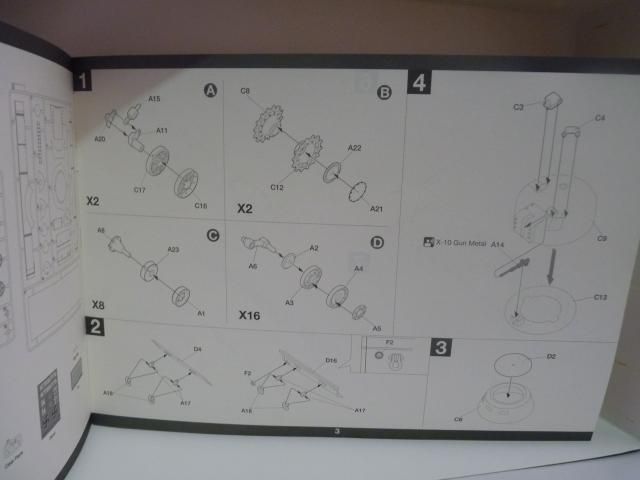
The instruction is very well made and clear and easy to follow. Definitely not a Dragon level confusion.
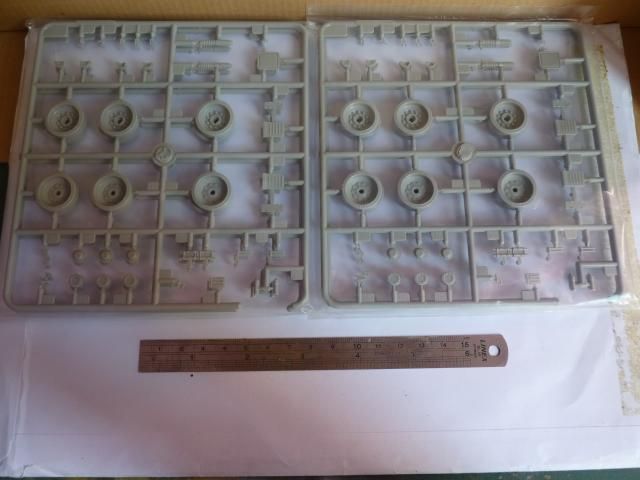
Here are the sprues of the entire kit -
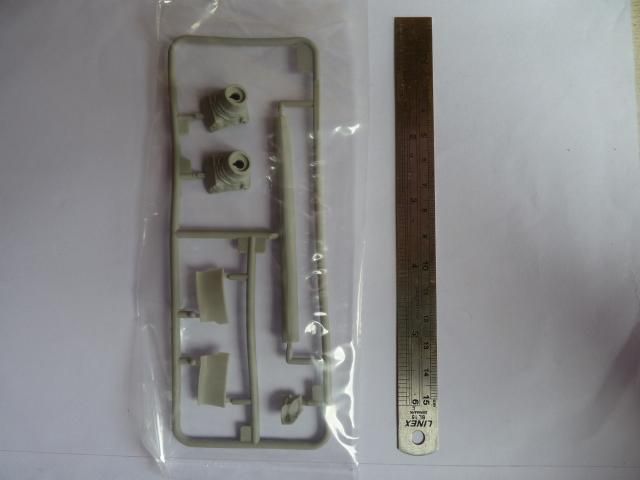
Sprue A -
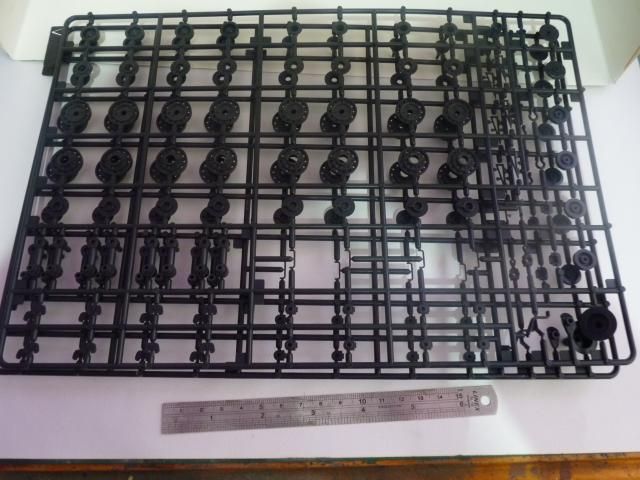
Sprue A contains mostly the road wheels and the return rollers and there are 2 sprues of them.
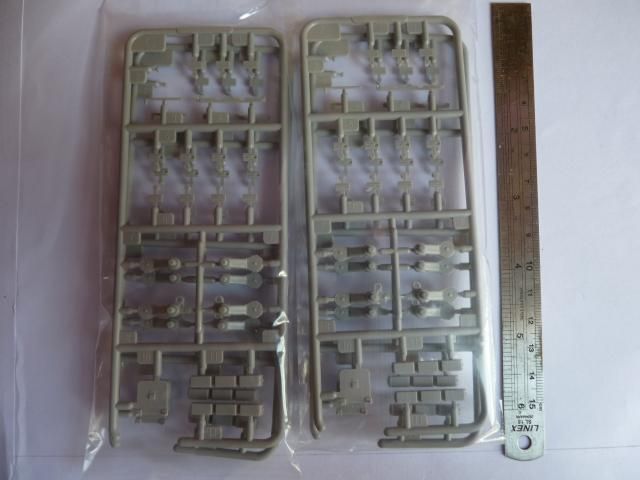
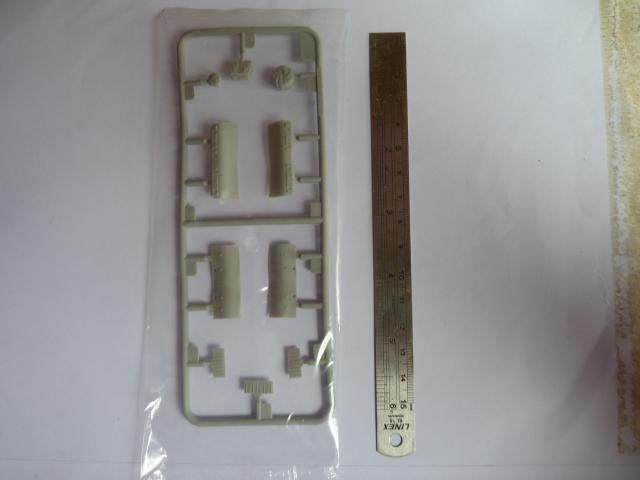
Sprue B -

Sprue B is entirely for the tracks and there are a total of 3 sprues of them.
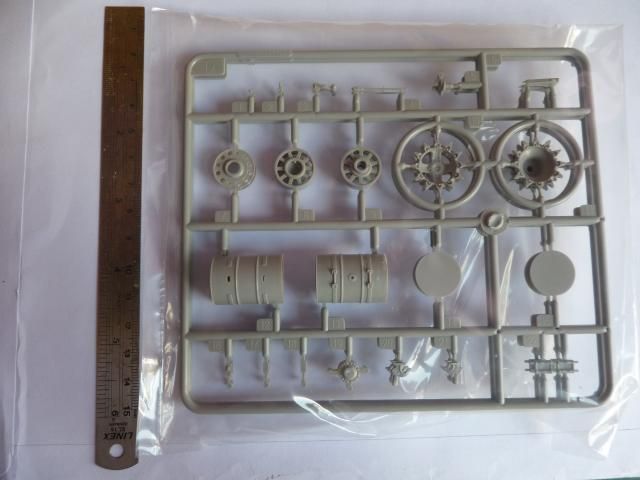
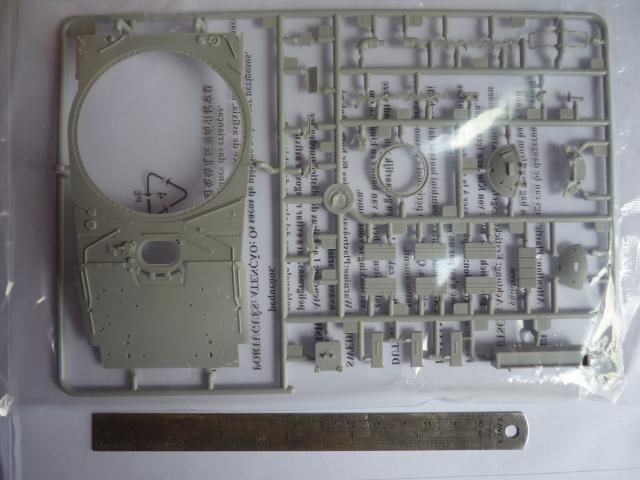
Sprue C-
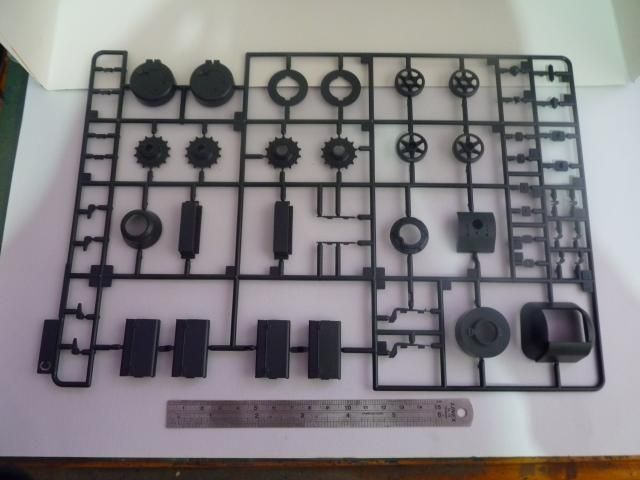
Sprue C has the parts for sprockets, idler, the mantlet and the driver and radio operator cupola famously known by WoT players as R2-D2.
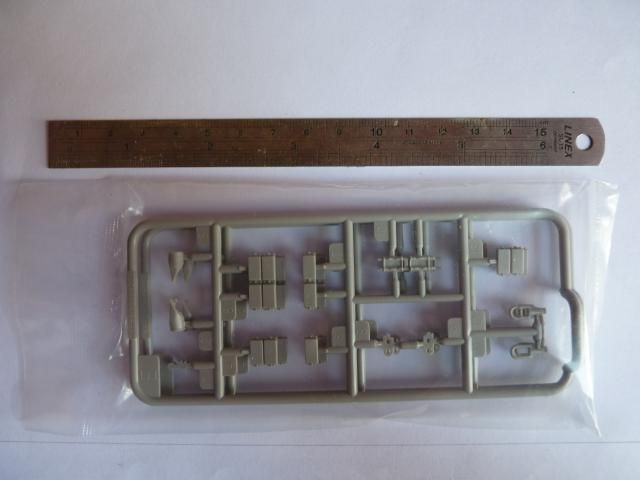
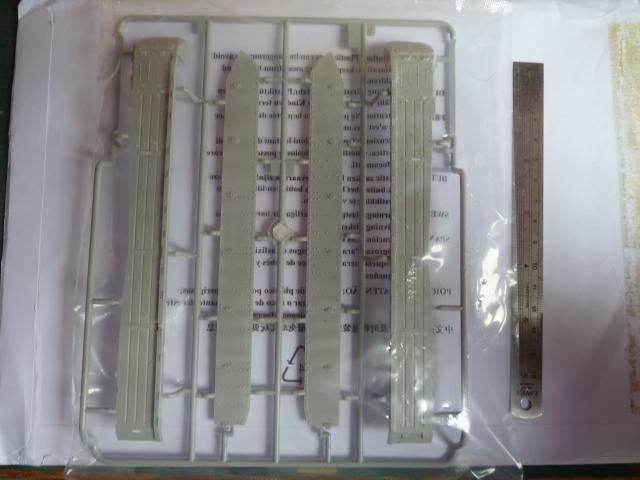
Sprue D-
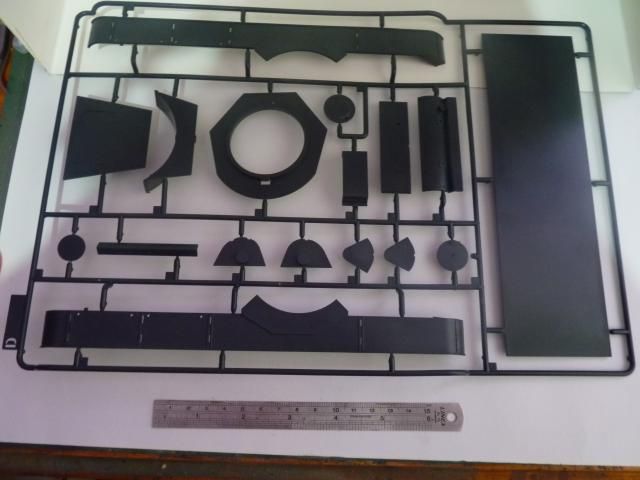
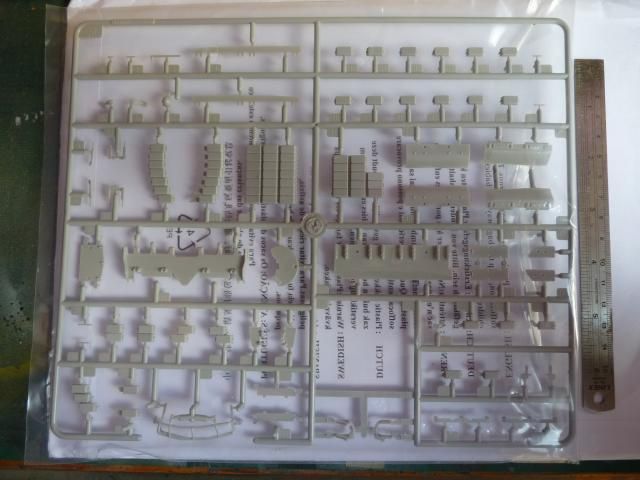
The two fenders, the bottom plate of the hull along with some other large parts are included in this sprue.
This is where the sprue ends. Next is the hull -
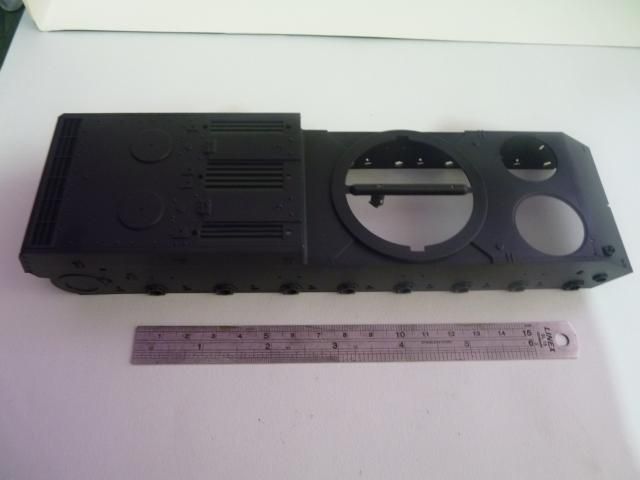
You can appreciate the great size of the hull shown alongside a 6 inch ruler for scale.
The turret -
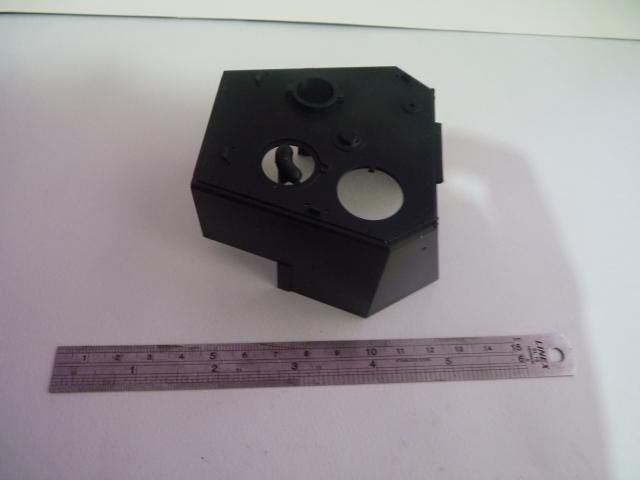
I didn't capture the great height of the turret in this photo but it is a TALL turret.
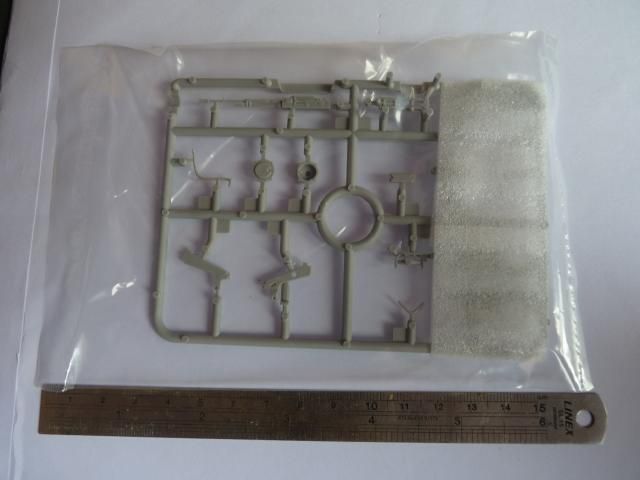
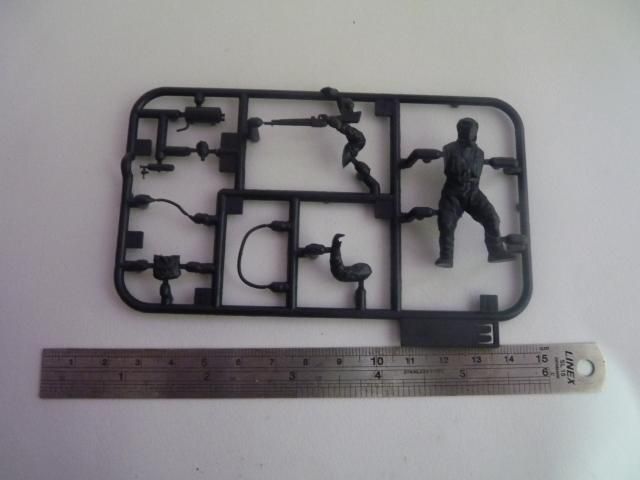
And finally, we have the little sprue for the nuclear war figure that comes with the kit -
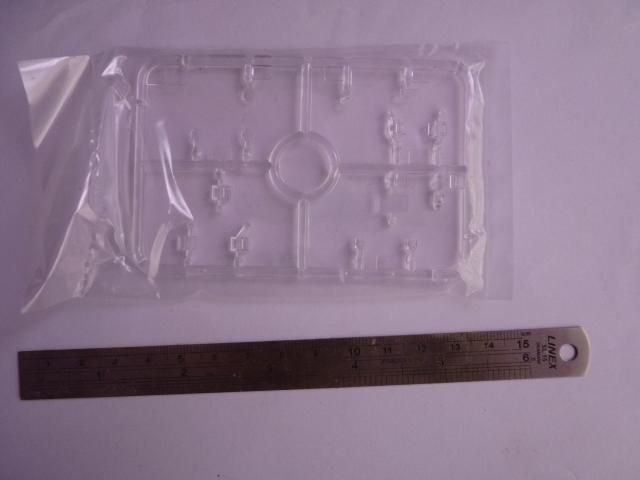
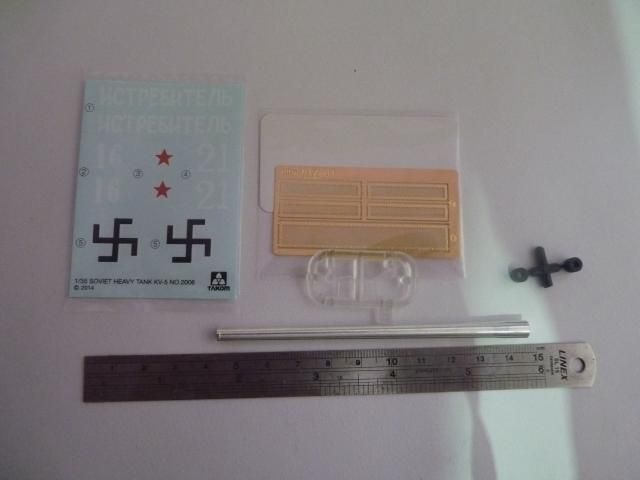
I also took a picture of a bit more close up of the metal barrel, PE and stuffs -
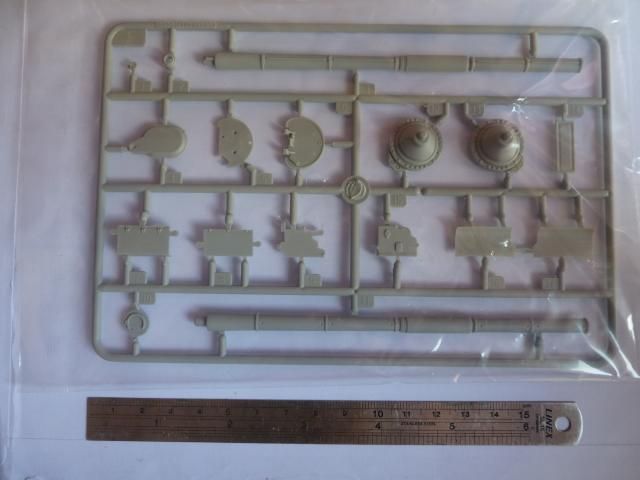
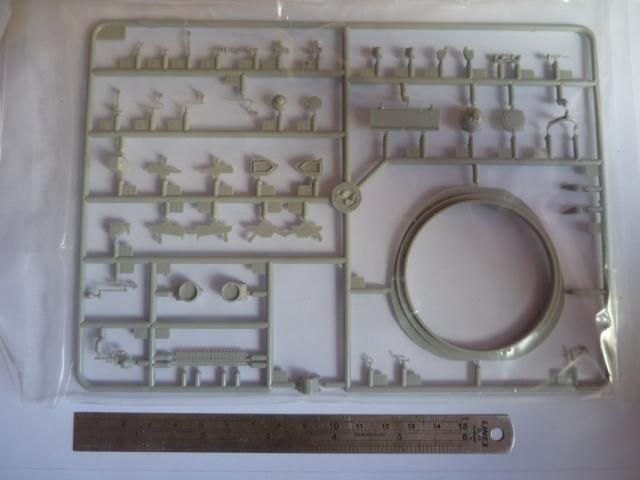
Since I will surely be building this kit, I opened up the bags and took some close up pics of the parts quality -
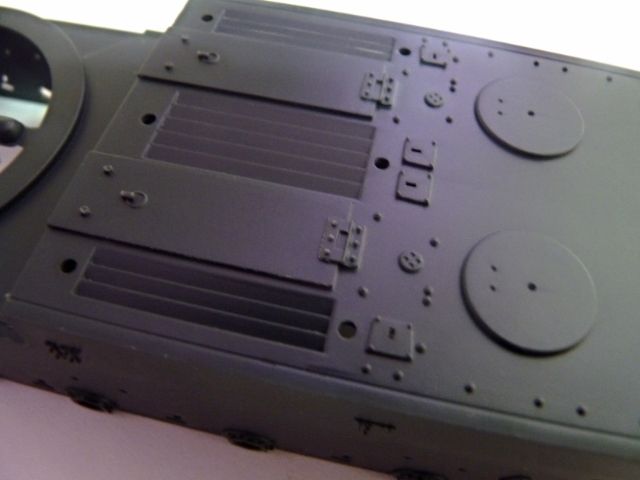
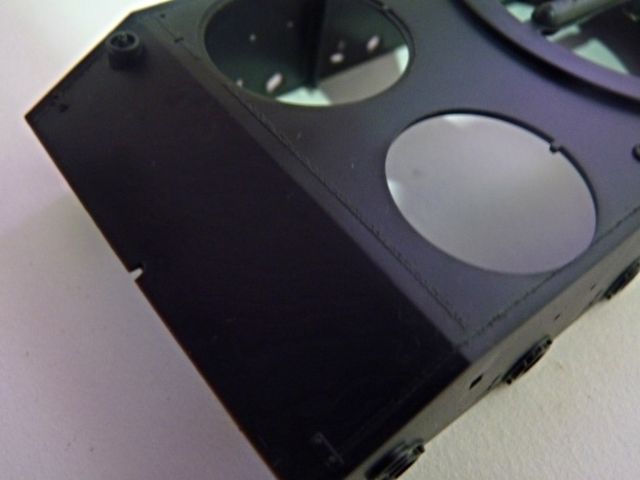
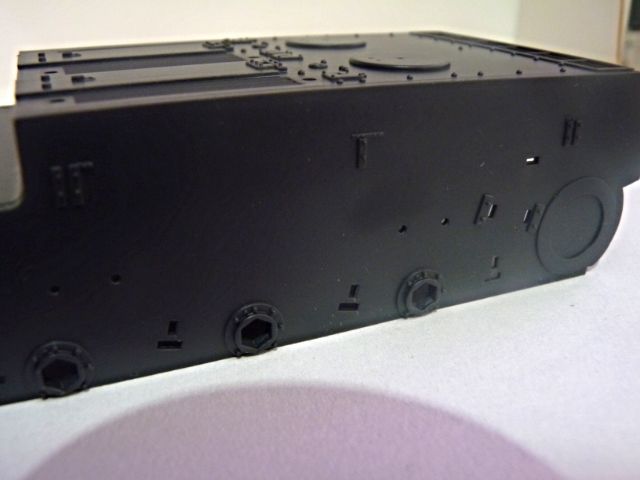
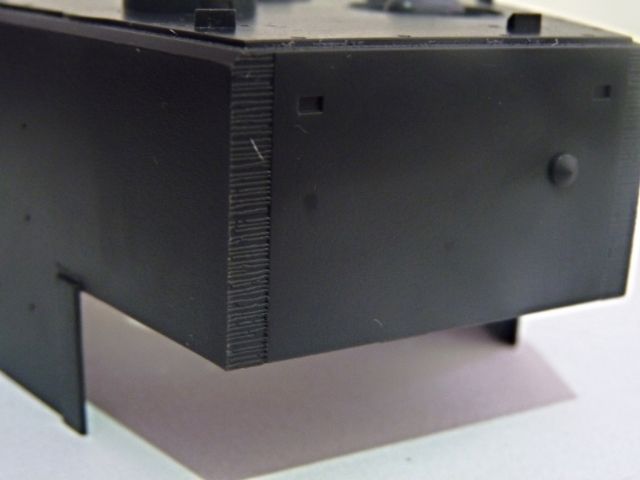

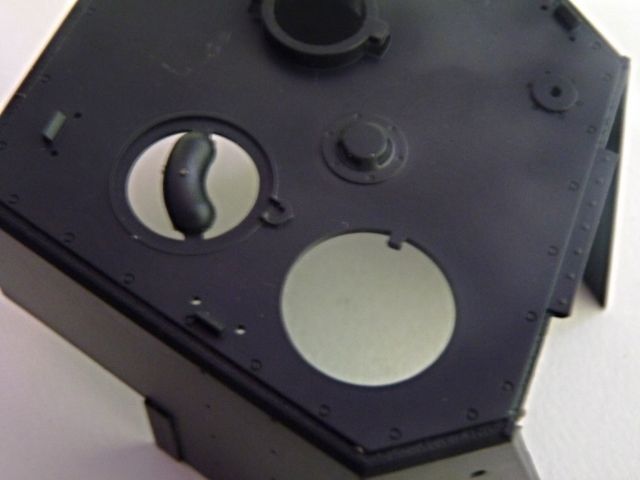
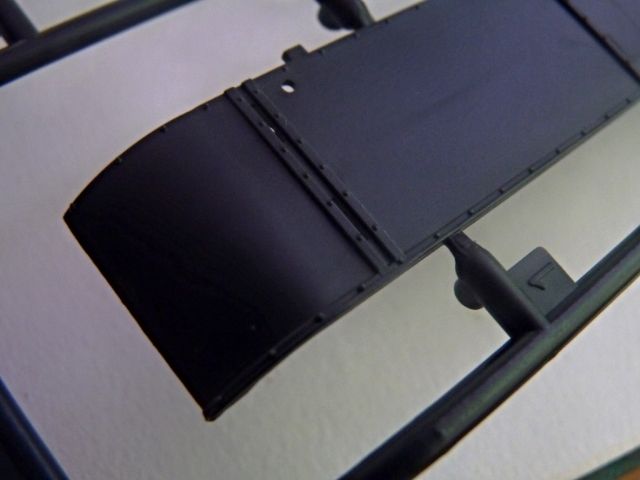


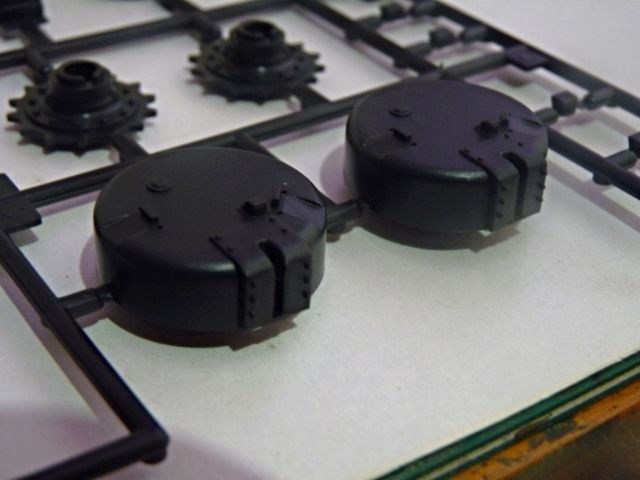
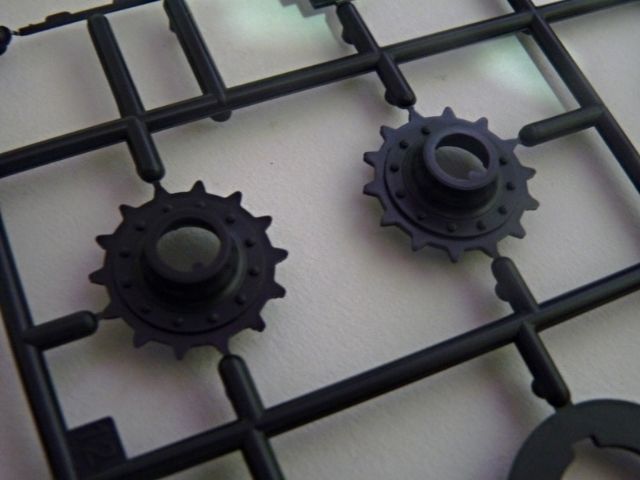
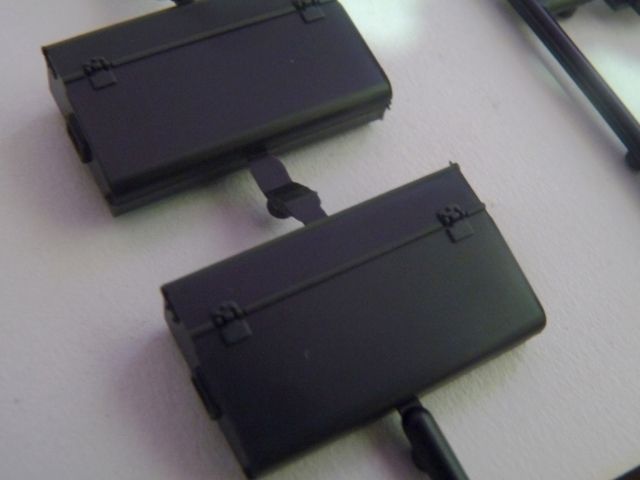
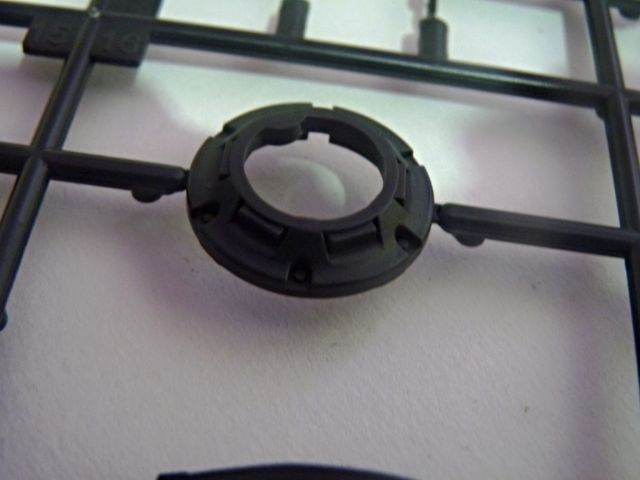
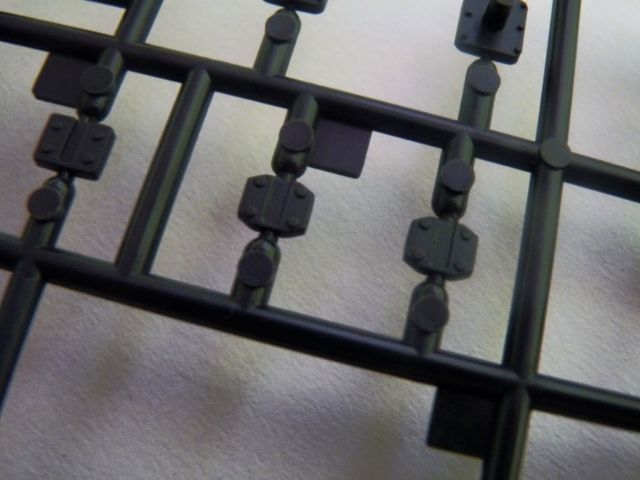
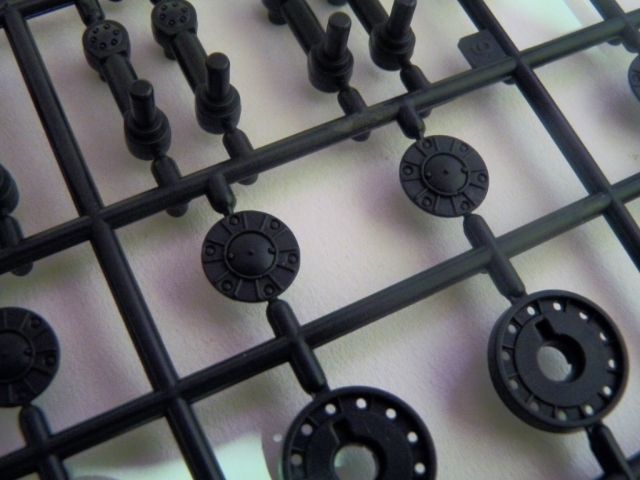
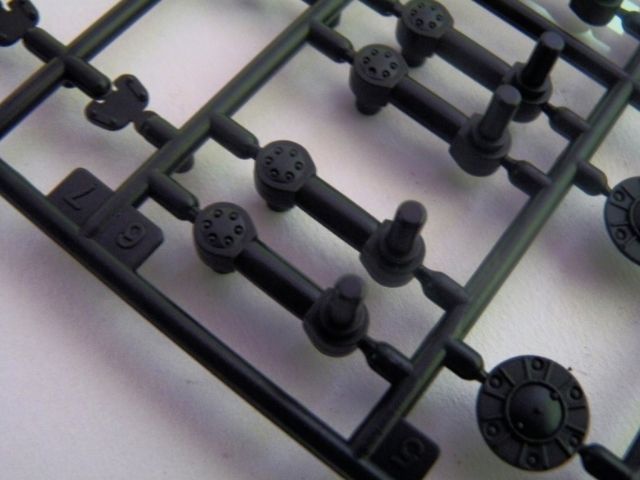
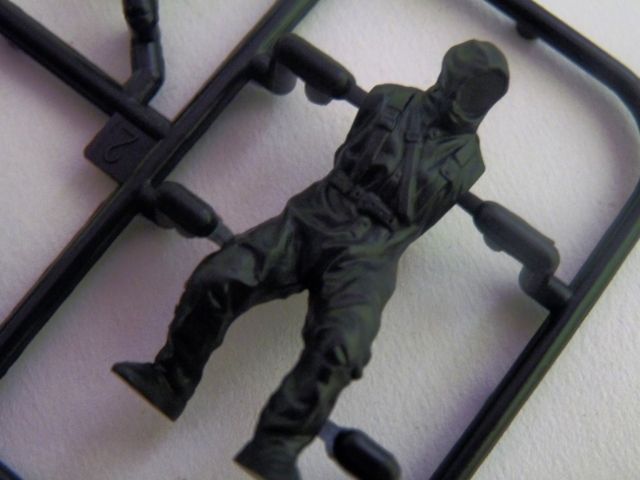
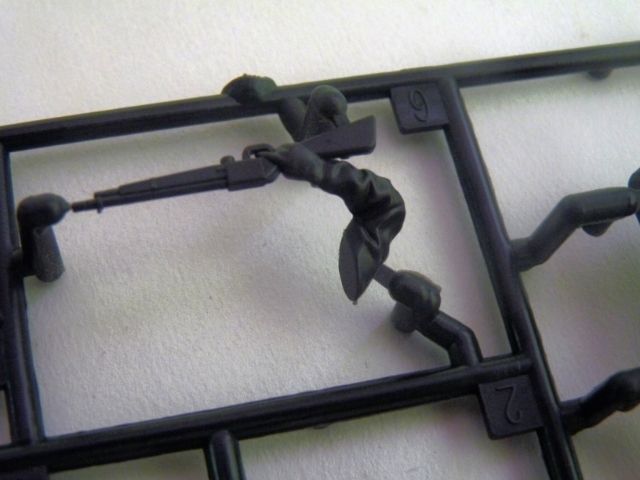 The Pros of the kit: first styrene kit of this tank in this scale, crisply moulded details, clear parts for lights, a rather unique vehicle, a METAL barrel and relatively low parts count, VERY simple build
The Cons of the kit: a high price of £50.99 ( or more) for a VERY simple build, Lack of clear parts for the sights, Photo Etch included only for the engine grille, Hatches are moulded shut, complete lack of casting texture on the mantlet and possibly casted parts, no tow cables.
If you are into unusual vehicles and a modeller who like to build non main-stream topics and subjects ( like me ) then this is one of the kit that you surely must have. Any fan of Russian machine will love this kit. Any fan of the tier 8 Premium tank of World of Tanks will love this.
This will definitely be a great addition to any shelves and I think I will be doing a full detailed wips very shortely.
Read more >>
When the T-80BV was announced by Trumpeter, I just can't help but be drawn to it due to its amazing looking turret set up. Something stayed my hands in getting it and so I waited and then suddenly, trumpeter released the T-80BVD. Being a guy that wants to go for the kit most people won't buy, I had to get my hands on the T-80BVD as it was obvious nobody even did any reviews ( as far as I have checked, I could be wrong).
For this one, I just can't find any inbox review or anything of the kind and I know people would be curious so I decided to do a inbox peek for this particular one.
little information about this particular vehicle - Trumpeter name this as th T-80BVD but that is only half true. This is Basically a Ukrainian T-80UD with a Russian T-80BV ERA layout. The Engine deck and the external fuel tanks positions are from the Ukrainian T-80UD as well as the snorkelling device as some are aware that the snorkelling device on the russian T-80s are much larger and look different ( evident on the B, BV and U). A quick search on Armorama forum tells me that this is basically a kind of prototype the Ukrainian did which leads the development to the UD.
As you all know, I'm one of the guys who don't give a damn about how a side skirt of a tank is 2mm too short or too long or blah blah. So, I will just keep this as a look of what is inside the box and some very obvious pros and cons of the kit.
First we have a rather bad looking box-art. Why the artist decide to show the back, I will never know. Probably to point out the two fact I just made.
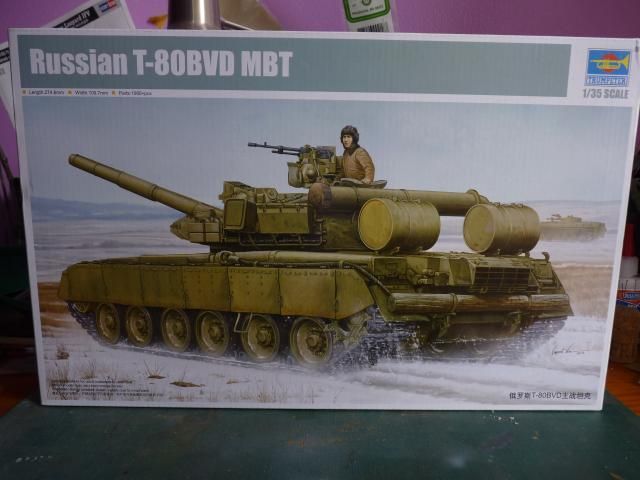 That box is wide and a typical 1/35 model box and normal Trumpeter's boxes thickness.
And then we have the manual, the colour guide and the usual sheet of a catalogue page showing the new releases -
Here are the sprues of the entire kit -
Sprue A -
Sprue A contains mostly the road wheels and the return rollers and there are a total of 4 sprues of them.
There is no Sprue B in the kit so Sprue C -
There are 4 of them and consists mainly of the Suspension arms and other stuffs.
Sprue D -
Sprue D is for the idlers and the fuel tanks.
Sprue E-
Sprue E contains some of the ERA blocks and the two cable hooks.
Sprue F -
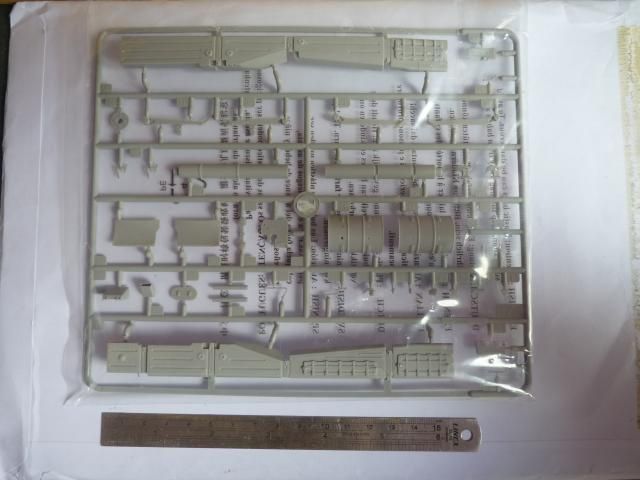
Sprue F , as you can see clearly, contains the gun along with the hatches and the transmission cover.
Sprue G-
Sprue G is for the lower part of the turret along with some bibs-and-bobs
Skipped again to Sprue L -
This sprue is for the external machine gun as you can see.
Then we skipped to Sprue M -
Sprue M is mainly the ERA blocks along with the engineering blade.
and then, we have two little sprues of very rubbery stuffs ( or it could be rubber )-
Sprue S -
which is the un-ditching log and the mantlet fabric cover and mud flap. Why they decided to mould the log in this rubbery thingy, I have no clue.
Sprue W -
More mud flaps along with some parts dedicated for fabric stuffs like the spent casing pouch for external machine gun.
Then we have sprue X -
Here is the sprue for the fenders and the side skirts.
And then we have Sprue Y -
As you can see, it is the first half of the top hull along with some more bibs and bobs.
After that, we have Sprue Z -
Sprue Z contains the fuel tanks on the fenders as well as the storage boxes. ( I have to ask, do T-80 have fuel tanks on the fenders?)
And then, we have these three separate pieces,
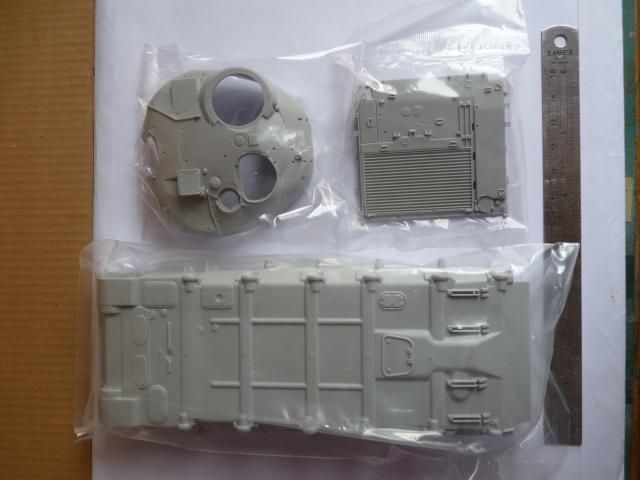
The upper half of the turret, the UD engine deck and the chassis.
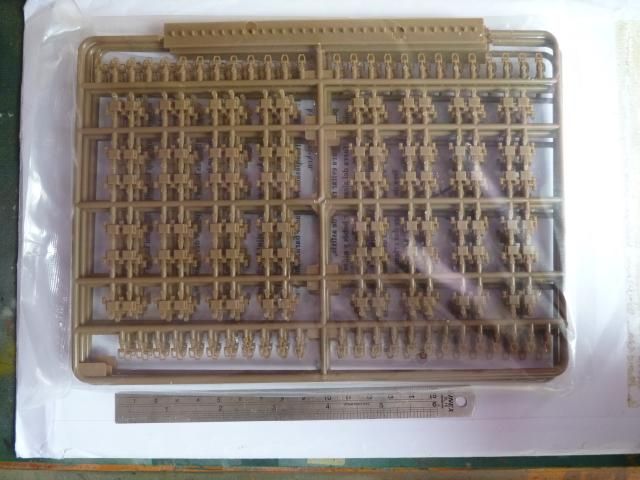
and as per Trumpeter, the most annoying parts of the kit -
the damn tracks. I mean, they are good but it's just so much work. the guide horns are moulded separately as well. I am not happy about that.
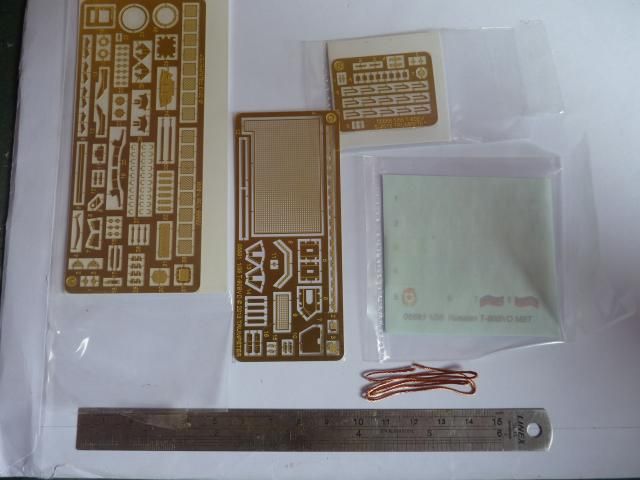
Then, we have three frets of Photo etchs and a metal cable and some generic numbers and a russian flag for decals -
Why they include a Russian flag decals on a Ukrainian prototype is way beyond me.
And finally, we have the clear parts for the lights and scopes -
Since I will surely be building this kit, I opened up the bags and took some close up pics of the parts quality - ( just click on them. I arranged them to be smaller for spacing reason)
The Pros of the kit: numerous options for open/closed hatches, crisply moulded details, clear parts for sights, a rather unique vehicle, a kit for Ukrainian armour fans
The Cons of the kit: a high part count at 1000+, a very high price of £59.99, as usual for Russian vehicle- gun cannot elevate, very complex kit; not made for beginners
If you are into unusual vehicles and a modeller who like to build non main-stream topics and subjects ( like me ) then this is one of the kit that you surely must have. Any fan of Russian machine will love this kit.
This will definitely be a great addition to any shelves and I think I will be doing a full detailed wips very shortely.
Read more >>